The public's fear of fiberglass stems fundamentally from conceptual confusion. In many people's minds, the word "fiber" seems to inherently carry a negative connotation, easily equating it with asbestos, a material proven to be seriously harmful to the human body, or with inferior materials with unpleasant sensory qualities. To dispel this panic, we must first dispel these misconceptions and address these misconceptions from the fundamental perspective of materials science.
Comparing fiberglass to asbestos is the most widespread and harmful misconception. Although both materials exhibit a fibrous form at a macroscopic level and have been used as insulation and fireproofing materials, they differ fundamentally in their origins, physical properties, chemical properties, and, most importantly, biological effects.
Fiberglass is a man-made inorganic fiber. Its production process is controlled: raw materials such as quartz sand, limestone, and recycled glass are melted at high temperatures to form a molten glass solution, which is then refined through high-speed centrifugation or stretching to form extremely fine fibers.
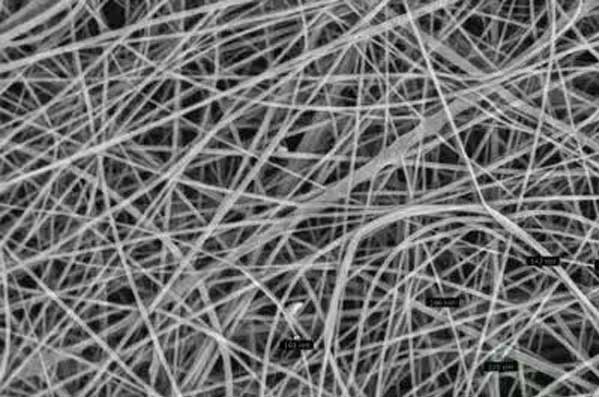
Asbestos, on the other hand, is a naturally occurring silicate mineral that is mined. This difference in source means that humans can design and produce glass fibers with specific chemical compositions, diameters, and lengths to optimize their performance and safety. However, the physical and chemical properties of asbestos are natural and difficult to alter.
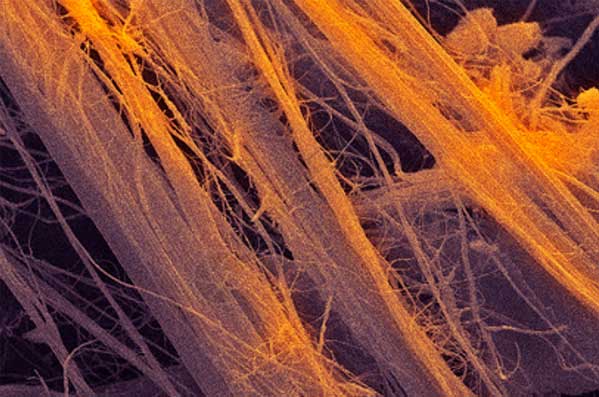
This is the first key difference in the health risks between the two. Glass fibers are cylindrical, single fibers. When subjected to external forces, they only break transversely into shorter fragments, while their diameter remains largely unchanged. These fragments no longer possess typical fiber properties.
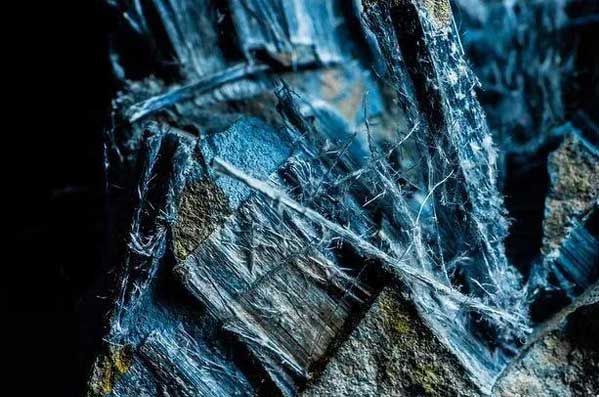
In contrast, asbestos fibers have a completely different structure. They exist as bundles. When disturbed, they split longitudinally along the fiber axis into thousands of thinner, longer fibers. This means that a single, seemingly large asbestos fiber can break into countless tiny fibers that are easily inhaled and penetrate deep into the very back of the lungs (the alveoli). This unique splitting ability makes asbestos dust extremely difficult to control and extremely hazardous.
Corrosion Resistance
Glass fibers have good corrosion resistance, while asbestos easily decomposes in acidic environments and has poor corrosion resistance.
Thermal Stability
Glass fibers remain stable at high temperatures, while asbestos releases harmful substances at high temperatures.
Chemical Reactivity
Fiberglass is less reactive to chemicals, while asbestos can produce toxic byproducts in certain chemical reactions.
If differences in physical properties are the cause, then the vast chasm in biopersistence is the effect, forming the core scientific basis for determining the health risk levels of each. Biopersistence refers to the ability of a fiber to resist chemical dissolution by biological fluids and physical clearance (such as phagocytosis and excretion by macrophages) once it enters the human body (especially the lungs). Simply put, it's how long a fiber remains in the body.
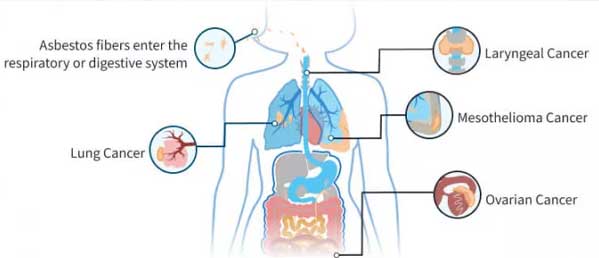
Asbestos, particularly its amphibole cousins (such as crocidolite and amosite), is extremely chemically stable and biopersistent. Once inhaled deep into the lungs, it is virtually impossible for the body's defenses to degrade or eliminate it. It can reside permanently in lung tissue, continuously irritating cells physically and chemically. After a latent period of decades, it can potentially induce serious diseases such as asbestosis, lung cancer, and mesothelioma.
Modern glass wool, used for building insulation, is manufactured with safety in mind. By adjusting its chemical composition (for example, by increasing the content of alkaline earth metal oxides), these fibers are designed to have low biopersistence or biosoluble properties. This means that if accidentally inhaled into the lungs, they dissolve relatively quickly in the lungs' saline environment and are cleared from the body. Multiple studies have confirmed that this biosoluble glass fiber has an extremely short half-life in the lungs, significantly reducing its risk of causing chronic diseases.
Glass fiber ≠ asbestos: The former is a man-made, transversely fractured, biosoluble material; the latter is a natural, longitudinally split, highly biopersistent, and a confirmed carcinogen. The health risks of the two are vastly different.
Distinguishing different types of "wool": Glass wool, rock wool, and slag wool are all man-made glass fibers, but differ in their raw materials and quality. The public's negative perception of "chipping" and "stinging" often stems from low-quality slag wool and should not be attributed to all fiber insulation materials.
The starting point of panic: Conflating different substances is the first step in creating and spreading the "fiber panic" and is the most pressing cognitive foundation that needs to be corrected.
Glass fiber, a superior inorganic, non-metallic material, is suffering from a stigma stemming from information lags and conceptual confusion. Hopefully, this irrational "fiber panic" will gradually be addressed.
TIANJIN GREEN BUILDING TECH CO., LTD. is a leading manufacturer of environmentally friendly heat insulation materials, specializing in high-cost performance glass wool and stone wool insulation solutions for the building, industrial, and maritime sectors. Our products... [ Read More >>]